



updated Jan 2026
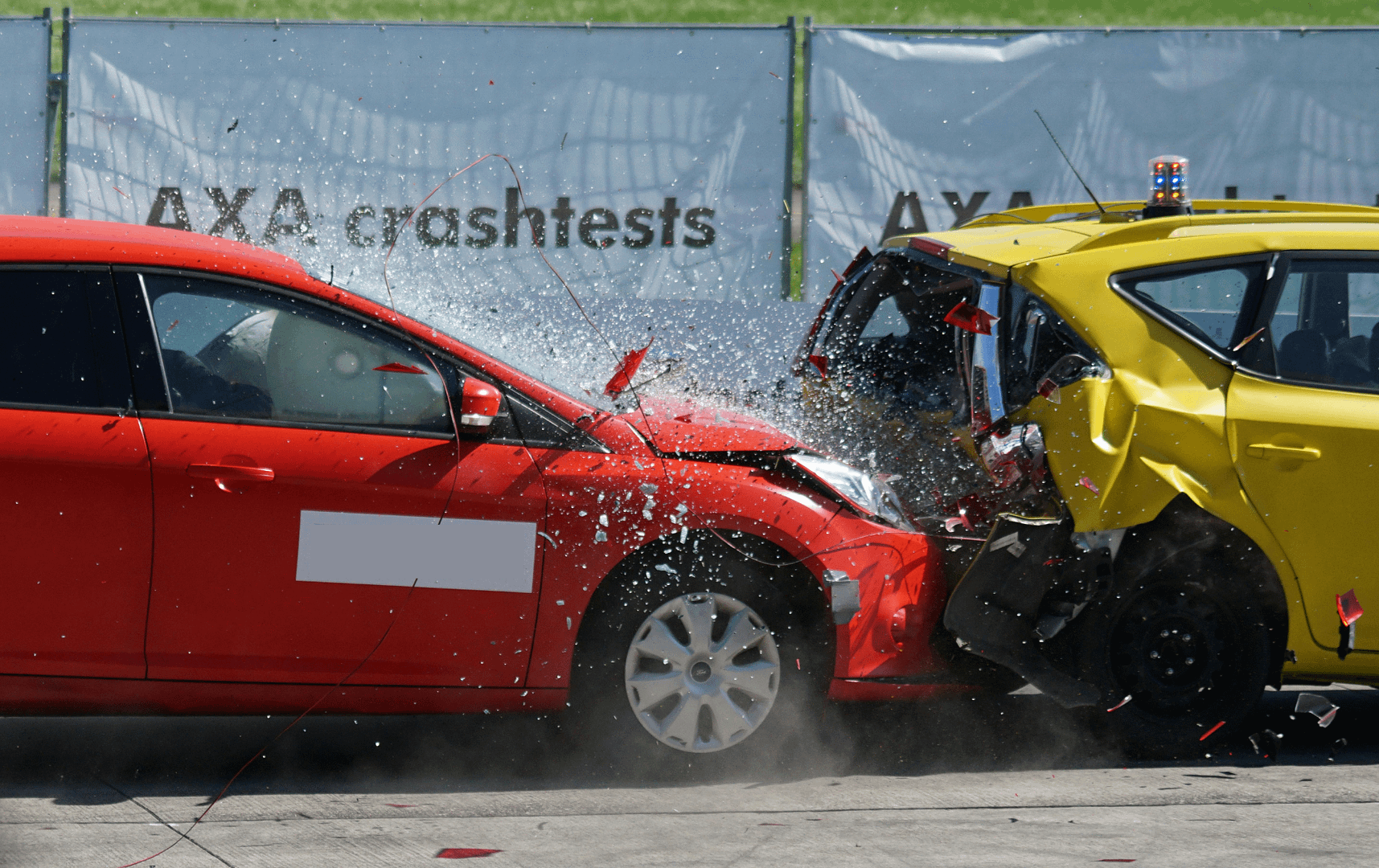
A car accident can leave you shaken — even if, at first glance, you seem “fine.”
Whiplash injuries are often confusing: symptoms may appear late, fluctuate, or feel out of proportion to what medical scans show. Many people are told to “just wait it out,” while their body and nervous system struggle to find stability again.
This article is meant to offer orientation, not alarm.
You’ll learn what whiplash is, how recovery typically unfolds, what helps (and what often makes things worse), and why healing takes time — especially when daily life leaves little room to recover.
What Is Whiplash (and Why It’s Often Misunderstood)
Whiplash occurs when the head and neck are suddenly forced beyond their usual range of movement — most commonly in rear-end or side-impact car accidents. While often described as a “neck injury,” whiplash usually involves multiple systems at once: muscles, connective tissue, joints, and the nervous system.
The term whiplash comes from the way the injury happens — it refers to the rapid back-and-forth motion of the head and neck, similar to the snap of a whip.
In a car accident or sudden impact, the body may stop abruptly while the head continues to move, creating this fast, forceful movement. The result can be strain or injury to muscles, ligaments, joints, and other soft tissues in the neck — hence the name whiplash.
Because whiplash rarely shows up clearly on imaging, it is frequently underestimated. This can leave people doubting their own experience — even while symptoms persist.

Common Whiplash Symptoms (Short- and Long-Term)
Symptoms can vary widely and don’t always appear immediately. Some people feel discomfort within hours, others only days later.
Common symptoms include:
- Neck pain, stiffness, or reduced range of motion
- Headaches, dizziness, or visual disturbances
- Fatigue and difficulty concentrating
- Heightened sensitivity to noise, light, or stress
Importantly, symptoms may change over time rather than follow a neat, linear path. This unpredictability is often one of the most challenging aspects of recovery.
Beyond pain and stiffness, some people experience longer-lasting effects after whiplash. These can include fatigue, difficulties with concentration, memory, or finding the right words. Such neuropsychological symptoms are often unsettling, especially when they don’t seem to match what imaging or standard tests show.
Because whiplash nearly always involves multiple systems at once, it is rarely straightforward for doctors or therapists to identify a single intervention that quickly resolves all symptoms.
How Long Does Whiplash Recovery Take?
What follows is informed by years of working with people recovering from whiplash injuries — and by seeing how differently recovery can unfold from one person to another.
There is no single recovery timeline that applies to everyone.
Mild cases may resolve within weeks, while more complex cases can take several months — especially when stress, repeated strain, or insufficient rest are involved.
What often slows recovery is not the injury itself, but the pressure to “function as usual” before the body has regained a sense of safety and coordination.
Recovery is rarely a straight line. Setbacks don’t necessarily mean something is wrong — they often signal that the system is being asked to do too much, too soon.
What Helps Recovery (and What Often Makes It Worse)

What Actually Supports Healing
Gentle movement, pacing, and attentive care generally support healing.
What Tends to Hinder Recovery
Unfortunately, humans go into one of either extremes:
- complete immobilization for too long
- or pushing through pain and fatigue in the name of productivity
Many people unknowingly oscillate between these extremes — resting rigidly at times, then overexerting themselves at others — without realizing how much strain this creates.
Understanding Habits — and Why They Matter After Whiplash
Another often overlooked factor is habit.
Long before an accident, most of us develop movement and postural habits that feel “normal” but require constant effort. After whiplash, these habits can quietly increase strain — and in fragile situations, they can actively undermine recovery.
Soon after an accident — often within the first 24 to 36 hours — people begin to notice unclear or unfamiliar pain. It may appear at the end of a familiar range of motion, or as stiffness, guarding, or hesitation.
A very normal human reaction is to avoid those sensations.
From there, two typical strategies tend to emerge:
- Turning on muscles excessively to ensure the painful movement never happens again
- Avoiding the movement altogether for as long as healing is expected to take place
At first glance, these may appear to be different strategies. In practice, however, they are closely related.
Even though it does not need to be, avoidance is nearly always implemented through muscular activity — often without conscious awareness.
In other words, avoiding a movement usually means actively holding, bracing, or limiting oneself against it. Over time, this constant over-activation increases sensitivity to pain. The body is then dealing not only with the consequences of the accident, but also with the ongoing effort of protecting itself against it.
Not All Whiplash Injuries Involve Cars
Not all whiplash injuries involve car accidents.
Sometimes the mechanism is shock, surprise, and a sudden loss of orientation — for example in a skiing or sledding accident, or even in everyday situations that involve abrupt impact.
What matters is not the label of the accident, but how the body experiences the sudden force — and how it responds afterward.
Why Recovery Looks So Different From Person to Person
There is no single, simple solution. People are different, and the effects of an accident are often just as different as the accidents themselves.
Some people experience rear-end collisions on the highway at high speed, yet show minimal tissue damage and recover quickly. Others may be involved in what seems like a minor incident — even at low speed — and struggle for months with pain, fatigue, concentration problems, or word-finding difficulties.
I have worked with a person who accidentally walked into a glass door, not realizing it was there. The sudden impact yanked her head backward, resulting in a concussion and clear restrictions in neck movement — a whiplash injury without a vehicle involved.
The shock and disorientation can be just as significant as in a traffic accident. It is sometimes easier to grasp this when we think of birds flying into windows: the impact alone can be enough to overwhelm the system.
It can be difficult to imagine the physical limitations that may follow — limitations that are often hard to overcome, even with excellent physical therapy.
Why There Is Rarely One “Fix”
Because whiplash almost always involves multiple systems at once — muscles, connective tissue, joints, and the nervous system — it is rarely straightforward for doctors or therapists to identify a single intervention that quickly resolves all symptoms.
In many cases, that one decisive intervention simply does not exist.
Recovery is usually the result of many small, well-timed adjustments rather than one dramatic correction.
A Guiding Principle: Least-Cost Movement
There are guidelines, valid principles, to which we are all subject. The most basic common ground that we all share is our human design, and with that I mean the way we are made and made to move. As a working hypothesis, I believe that the laws of physics also apply to our daily lives. With that I have produced good results on many occasions. And over time those results have produced some confidence. Let’s look at one of those guidelines:
For any movement you want to perform, there is a correct way to perform it. And the correct way to perform it is the way that has the least cost on our body tissues.
All the people I have seen and/or have worked with so far, having suffered an accident, and soon thereafter, often within the first 36 hours, some unclear pain surfaced . Maybe they experience it in movements, towards the end of their range of motion as they used to know it, restrictions because of that pain. A very normal human reaction is to avoid those movements.
But now there are two ways to deal with that situation:
- one is to turn on muscles to make sure that one will never come near such a pain point ever again
- another one is to simply not go there, as long as the healing process is going on.
There’s no guesswork involved which is the one that costs more energy and also causes more tear and wear.
Yes, you’re right, it’s number one. And choice #1 is also the one that most people choose for coping with the difficulties that follow their whiplash accident.
The distinction that follows is subtle, but important — it looks at this question on a strictly technical level.
At least, at a strictly technical level, this is true:
muscles only act when they receive a signal.
No signal — no contraction.
In that sense, simply not going there would indeed be the least costly response.
However, in practice, most people do not yet have the inhibitory control required for this kind of non-action.
What is intended as “avoidance” is therefore almost always carried out through muscular activity — through bracing, holding, or pre-emptive tension — often without conscious awareness.
This is where the real cost arises. And all of this over expenditure of energy is making for a much greater sensitivity to pain, because now you are suffering the consequences of the accident, and you also have to cope with your own reactions to those consequences.

Correcting Habits in Your Movement
We need to acknowledge that, after whiplash, we are often in a maze.
And finding a way out of that maze is not automatic — it requires attention.
Healing typically takes weeks, sometimes months. During that time, pre-emptively “turning on” muscles in an attempt to protect oneself is not supportive of recovery. On the contrary, it often places additional strain on tissues: increasing joint compression, irritating ligaments, tendon sheaths, and muscle attachment points, and potentially contributing to ongoing inflammation.
Time and again, when I begin working with someone after whiplash, it becomes clear that we are not directly “healing” the injury. That is not possible.
The body does the healing.
But it can only do so when it is not constantly exhausted.
When habitual over-expenditure of energy becomes part of every movement, the body loses the protected space it needs to recover. It is continually over-extending itself simply to function. For this reason, taking a closer look at habitual reactions is not optional — it is essential. Not because I insist on it, but because without this shift, recovery from whiplash is often prolonged indefinitely.
What has consistently produced results is not forcing change, but addressing the underlying habits — the automatic reactions that drive unnecessary effort.
And this, once again, comes down to how you organize yourself in activity:
patterns of reaction that were established long before any accident occurred.
At this point, the original question —
“What should I do after a whiplash accident? And how long will it last?”
— has changed.
Significantly.
The Role of the Nervous System in Whiplash
This is a key differentiator — and often the missing piece.
Whiplash is not only a mechanical event. It is also a nervous-system event.
At the moment of impact — whether through a collision, a fall, or a sudden shock — the nervous system shifts into a protective state. Heightened vigilance, muscular guarding, and stress responses are not signs of weakness; they are normal survival reactions.
The difficulty arises when this heightened state does not fully resolve.
Persistent muscle tension, exaggerated protective responses, headaches, fatigue, difficulties with concentration, word-finding problems, dizziness, or a general sense of being “not quite oneself” can all reflect a nervous system that remains on alert — even when imaging looks normal.
This is why symptoms may linger despite reassuring scans.
Nothing is being imagined.
And nothing is “all in your head.”
Understanding this helps build trust — in the process, in the body, and in recovery itself.
At this stage, the central question becomes:
How can we approach recovery constructively — in a way that does not unknowingly reinforce the problem, but instead supports healing?
This is not the easy way.
In fact, it is often the harder way.
But it is also the path that moves you out of a purely passive or victim role and into a place of self-determination, clarity, and dignity.
We are now walking a very fine line.
To make this more tangible, let’s take a hypothetical situation and walk through it step by step.
A Necessary Note on Context
This is also a delicate subject, particularly when insurance processes are involved. In some cases, responsibility and fault become points of contention, and pressure may be applied — explicitly or subtly — in ways that do not support recovery.
Unfortunately, I have witnessed this dynamic more than once.
All the more reason to understand what genuinely supports healing — and what quietly undermines it.
Supporting Recovery in Practice — Over Time

Why am I always so groggy?
The body recovers best when it is not constantly asked to perform against itself — when there is room for rest, recalibration, and gradual re-engagement with movement.
Ongoing pressure, time constraints, and the expectation to function “as usual” can quietly slow recovery over time — even when all intentions are good.
Supporting recovery, in practice, often means learning when to do less, not more — and how to reduce unnecessary effort so the body can redirect its energy toward healing.
How everyday effort quietly increases strain after injury
Let’s look more closely at the kind of habit we are talking about here — and how to picture it.
Imagine an activity that requires 10 pounds of force.
If the musculature provides exactly 10 pounds, that is actually good and efficient coordination.
In reality, most people generate far more force than necessary.
To make sure a suitcase “really moves,” 20 pounds are produced.
But only 10 are needed.
The remaining force doesn’t disappear.
From my observations, this excess force is absorbed by body tissues — often as unnecessary compression in joints and connective structures.
For most people, this level of over-effort is sustainable — until something disrupts the system.
Why Recovery Can Stall — Even When the Accident Was “Not Your Fault”
Not all whiplash injuries involve cars.
They can result from a collision, a fall while skiing, a sudden impact during sports, or even walking unexpectedly into a glass door. What these situations share is not speed alone, but shock, surprise, and sudden loss of orientation.
And yet, weeks later, things are still not fine.
Not fine at all.
This is often deeply confusing — especially when scans look “normal” and you are told that nothing serious seems wrong. The body, however, may still be struggling to find the space it needs to heal.
What Habits Have to Do With It
Long before an accident, most of us develop movement and postural habits that feel normal but quietly require extra effort.
Imagine an activity that objectively requires 10 pounds of force.
In well-coordinated movement, the body provides those 10 pounds — no more, no less.
In reality, many people apply 20 pounds “just to be sure.”
The extra 10 pounds don’t disappear.
They are absorbed by the body — compressing joints, increasing muscular effort, and raising baseline tension.
Most of the time, people cope with this without obvious problems. The body adapts.
Until it doesn’t.
After an accident, the same habits suddenly matter much more.
The Protective Reaction — And Its Hidden Cost
Soon after an accident — often within the first 24 to 36 hours — people begin to notice unfamiliar pain, stiffness, or hesitation near the end of a previously easy range of motion.
A very normal human reaction follows: avoid the sensation.
In practice, two responses usually appear — and they are closely linked:
- avoiding certain movements
- activating muscles excessively to prevent those movements
Even when avoidance feels passive, it is almost always implemented through muscular activity.
In other words: avoidance is rarely neutral — it is active guarding.
Over time, this constant over-activation increases sensitivity to pain. Now the body is dealing not only with the consequences of the accident, but also with the ongoing effort of protecting itself against it.
Recovery slows — not because something is “wrong,” but because the system never fully stands down.
The Unfair Part — and the Empowering One
This is where recovery can feel deeply unfair.
Someone else caused the accident.
You did nothing wrong.
And yet, the reactions that now shape recovery — stiffening, guarding, over-efforting — are your reactions, even though they are entirely understandable.
That may feel unjust.
But there is another side to that same coin.
Because these reactions belong to you, they are also the part of the situation you can influence. You do not have to wait for someone else to change.
This does not mean recovery is easy.
It does mean it is possible.
Creating the Space to Heal
Healing requires space — physical, mental, and temporal.
Even when a doctor provides a sick note, daily life often continues to apply pressure: deadlines, expectations, the need to function “as usual.”
Supporting recovery, in practice, often means learning when to do less, not more — and how to reduce unnecessary effort so the body can redirect energy toward healing.
This is not the fast path.
But it is a constructive one.
When to Seek Medical or Therapeutic Support
While many aspects of recovery involve learning to reduce unnecessary effort, there are clear moments when medical or therapeutic support plays an important role.
This does not mean something is necessarily “seriously wrong.”
It means making sure the foundations are secure — so recovery is not built on uncertainty.
Red flags that warrant medical evaluation
Seek medical assessment promptly if you experience:
- Severe or worsening neck pain
- Progressive neurological symptoms (numbness, weakness, tingling in arms or hands)
- Significant dizziness, visual disturbances, or balance problems
- Persistent headaches that intensify rather than settle
- Difficulty swallowing, speaking, or changes in consciousness
These signs are uncommon — but important to rule out.
Why ruling out serious injury matters
Early medical evaluation helps ensure that fractures, significant ligament damage, or neurological injury are not overlooked.
Even when the likelihood is low, knowing that serious injury has been excluded provides an essential sense of safety — and that safety itself supports recovery.
Why normal imaging doesn’t mean “nothing is wrong”
Standard imaging often focuses on structural damage.
Whiplash, however, frequently involves functional disturbances — in muscles, connective tissue, coordination, and the nervous system — that do not always show up clearly on scans.
Normal imaging does not invalidate symptoms.
It simply means that recovery requires a broader view than structure alone.
This is not fear-mongering.
It is about clarity.
An Exercise That Can Help Ease Tension After Whiplash
One of the most consistently helpful measures — and one we were repeatedly told made a difference by patients — is daily walking outdoors, ideally for about 30 minutes.
Whenever possible:
- choose natural or soft ground
- walk in a forest, park, or quiet outdoor environment
- avoid asphalt or other hard, unforgiving surfaces
While no single activity suits everyone, walking offers a reliable starting point.
The human organism has evolved over millions of years for movement — and walking, as an alternating, bipedal motion, is deeply aligned with our design. It gently activates the entire musculature, supports circulation, and encourages coordinated movement without forcing effort.
In that sense, walking draws on something fundamental — you have your ancestral design on your side.
The goal is not performance.
It is re-engagement without strain.
What Else Might Be Needed?
Recovery rarely involves just one layer.
As human beings, we are multifaceted — physical, mental, emotional, and social — and whiplash often affects more than one of these at once.
My own work focuses on movement and nutrition, and on how these interact with thinking and habitual patterns. This can address both physical organization and parts of the mental load that accompany recovery.
Depending on your situation, additional support may be helpful, including:
- a physiotherapist, chiropractor, or osteopath to address structural and mechanical aspects
- medical professionals who can monitor healing after significant impact
- trauma-informed approaches, such as Somatic Experiencing (SE), which help address the shock and nervous-system response that may accompany whiplash
It is often wise to involve your GP or family doctor to supervise the overall process — ensuring that important developments are not missed and that care remains coordinated.
Recovery works best when no single professional has to carry the whole picture alone.
A Sustainable Path Forward
Recovery from whiplash is rarely linear.
It unfolds over time — through listening, adjustment, and gradual re-engagement with life and movement.
Progress often means:
- paying attention to signals rather than pushing through them
- allowing rest without guilt
- reintroducing activity step by step
- recognizing when “doing less” is actually doing something essential
There is no fixed deadline for healing.
Recovery is a process, not a race.
Conclusion
Whiplash recovery is not about toughness — and not about passivity.
It is about agency without pressure, patience without resignation, and clarity without fear.
You may not control how the injury happened.
But you can influence how recovery unfolds.
With the right support, realistic expectations, and room to heal, progress is possible — even when it takes time.


