


aktualisiert Jan 2026
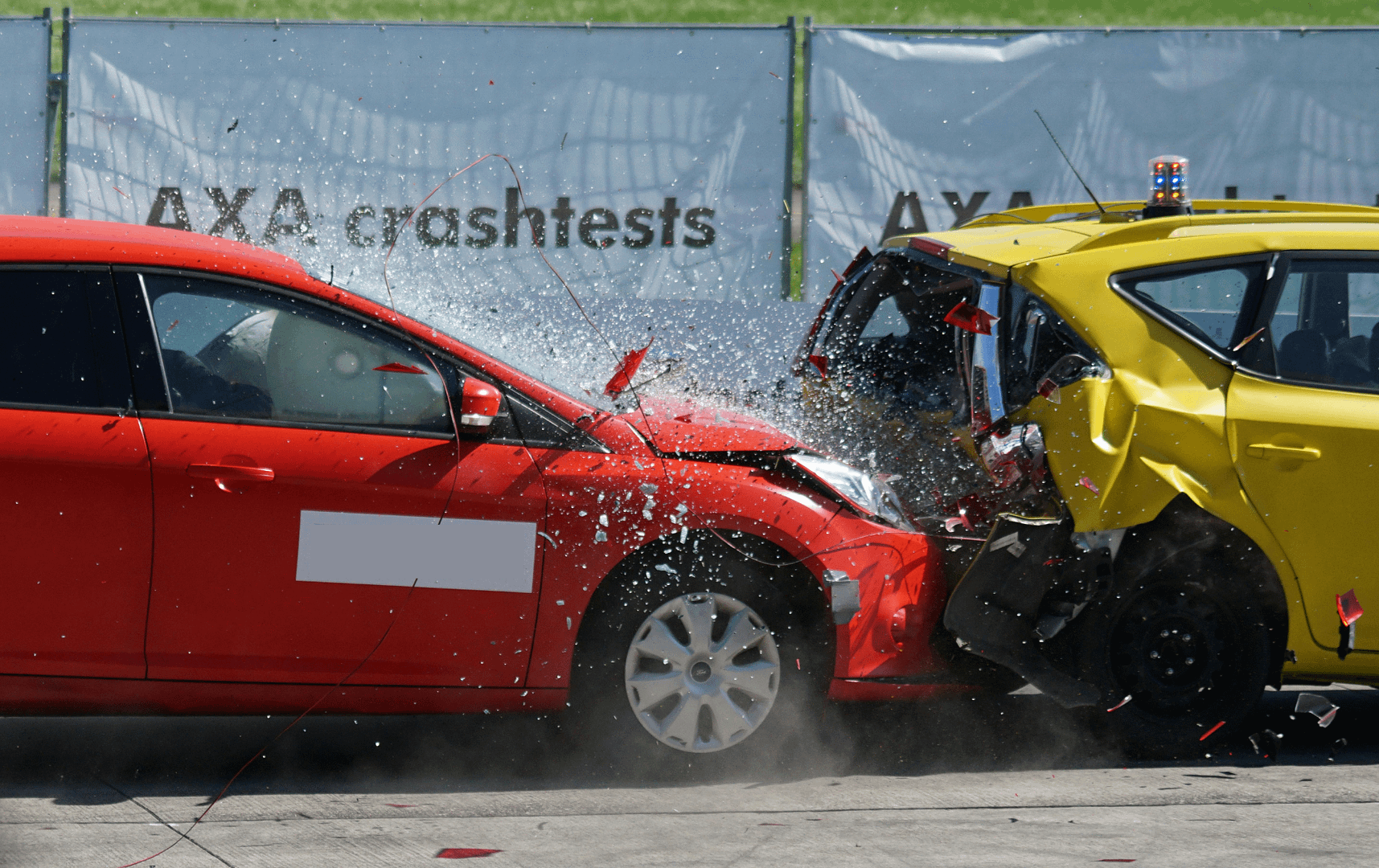
Ein Autounfall kann erschüttern – selbst dann, wenn man auf den ersten Blick scheinbar „glimpflich davongekommen“ ist.
Schleudertraumata sind oft verwirrend: Symptome treten verzögert auf, verändern sich im Verlauf oder fühlen sich nicht stimmig an im Vergleich zu dem, was medizinische Untersuchungen zeigen. Viele Betroffene hören, sie sollten „einfach abwarten“, während Körper und Nervensystem noch damit beschäftigt sind, wieder Stabilität zu finden.
Dieser Artikel möchte Orientierung geben, nicht beunruhigen.
Sie erfahren, was ein Schleudertrauma ist, wie sich die Erholung typischerweise entwickelt, was den Heilungsprozess unterstützt (und was ihn oft behindert) und warum Heilung Zeit braucht – besonders dann, wenn der Alltag wenig Raum zur Erholung lässt.
Was ist ein Schleudertrauma (und warum es oft missverstanden wird)
Ein Schleudertrauma entsteht, wenn Kopf und Nacken plötzlich über ihren üblichen Bewegungsbereich hinaus gezwungen werden – am häufigsten bei Auffahrunfällen oder seitlichen Kollisionen. Obwohl es oft als „Nackenverletzung“ beschrieben wird, betrifft ein Schleudertrauma in der Regel mehrere Systeme gleichzeitig: Muskeln, Bindegewebe, Gelenke und das Nervensystem.
Der Begriff Schleudertrauma beschreibt nicht eine einzelne Verletzung, sondern den Mechanismus, durch den sie entsteht. Er stammt von der Art, wie die Verletzung entsteht – und bezieht sich auf die schnelle Hin-und-Her-Schleudern von Kopf und Nacken, vergleichbar dem Schnalzen einer Peitsche.
Bei einem Autounfall oder plötzlichen Aufprall kann der Körper abrupt zum Stillstand kommen, während sich der Kopf weiterbewegt, wodurch diese schnelle, kraftvolle Bewegung entsteht. Das Ergebnis können Zerrungen oder Verletzungen von Muskeln, Bändern, Gelenken und anderem Weichgewebe im Nacken sein – daher der Name Schleudertrauma.
Da ein Schleudertrauma in der Bildgebung selten eindeutig sichtbar ist, wird es häufig unterschätzt. Das kann dazu führen, dass Menschen an ihren eigenen Erfahrungen zweifeln – selbst wenn die Symptome anhalten. Hinzu kommt, dass die Symptome sehr unterschiedlich ausfallen können.

Häufige Schleudertrauma-Symptome (kurz- und langfristig)
Die Symptome können sehr unterschiedlich sein und treten nicht immer sofort auf. Manche Menschen spüren Beschwerden innerhalb von Stunden, andere erst Tage später.
Häufige Symptome sind:
- Nacken- und Schulterschmerzen
- Steifheit oder eingeschränkte Beweglichkeit
- Kopfschmerzen
- Schwindel, Sehstörungen
- Müdigkeit oder Erschöpfung
- Konzentrations- und Wortfindungsprobleme
- Erhöhte Empfindlichkeit gegenüber Lärm, Licht oder Stress
- ein allgemeines Gefühl von „nicht ganz bei sich sein“
Nicht jede betroffene Person erlebt alle Symptome – und nicht jedes Symptom hat dieselbe Ursache.
Über Schmerzen und Steifheit hinaus erleben manche Menschen nach einem Schleudertrauma länger anhaltende Auswirkungen. Dazu können Müdigkeit, Konzentrationsschwierigkeiten, Gedächtnisprobleme oder Wortfindungsstörungen gehören. Solche neuropsychologischen Symptome sind oft verunsichernd – insbesondere dann, wenn sie scheinbar nicht zu den Ergebnissen bildgebender Verfahren oder standardisierter Tests passen.
Da ein Schleudertrauma fast immer mehrere Systeme gleichzeitig betrifft, ist es für Ärzt:innen oder Therapeut:innen selten einfach, eine einzelne Maßnahme zu identifizieren, die alle Symptome rasch auflöst. Vor diesem Hintergrund stellt sich oft die Frage, wie lange Genesung tatsächlich dauert.
Wie lange dauert die Genesung nach einem Schleudertrauma?
Die folgenden Ausführungen basieren auf jahrelanger Arbeit mit Menschen in der Erholung nach Schleudertraumaverletzungen – und auf der Beobachtung, wie unterschiedlich Genesung von Person zu Person verlaufen kann.
Diese Unterschiede lassen sich nicht allein durch die Schwere des Unfalls erklären. Entscheidend ist oft, wie der Körper auf das Ereignis reagiert – und welche Bedingungen er in der Folge vorfindet.
Es gibt keinen einheitlichen Zeitplan für die Erholung, der für alle gilt.
Leichte Fälle können sich innerhalb weniger Wochen lösen, während komplexere Verläufe mehrere Monate dauern können – insbesondere wenn Stress, wiederholte Belastung oder unzureichende Ruhe eine Rolle spielen.
Was die Erholung oft verlangsamt, ist nicht die Verletzung selbst, sondern der Druck, möglichst schnell wieder „wie gewohnt zu funktionieren“, bevor Körper und Nervensystem ein Gefühl von Sicherheit und Koordination zurückgewonnen haben.
Genesung verläuft selten geradlinig. Rückschläge bedeuten nicht zwangsläufig, dass etwas nicht stimmt – sie sind häufig ein Hinweis darauf, dass das System zu früh oder zu stark belastet wird.
Was die Genesung unterstützt (und was sie oft verschlechtert)
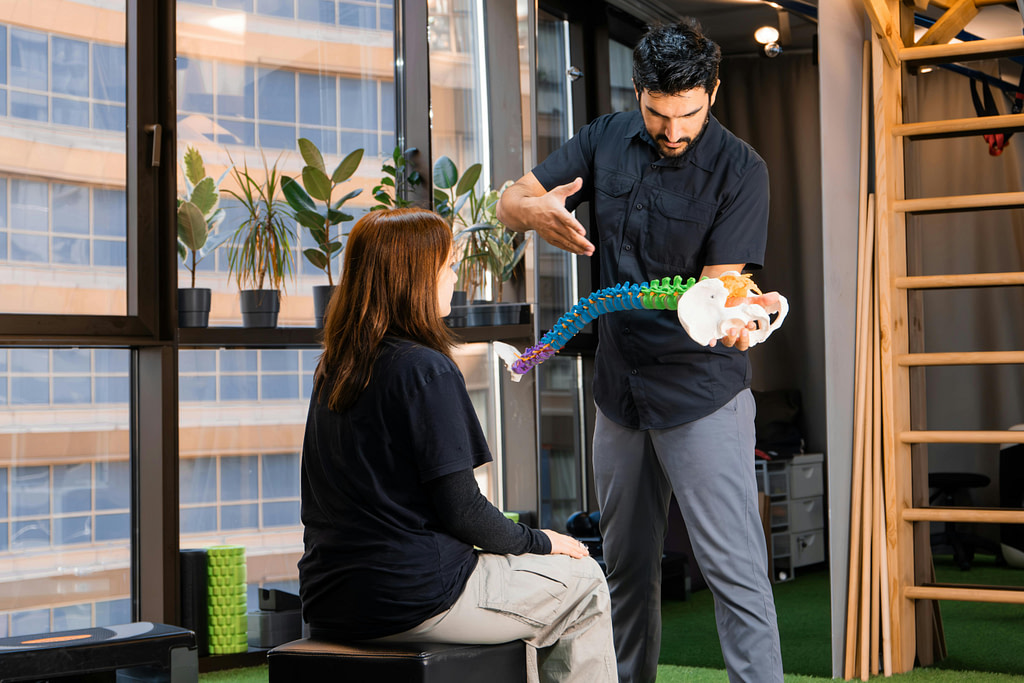
Was die Heilung tatsächlich unterstützt
Sanfte Bewegung, gutes Timing, und eine aufmerksame Begleitung unterstützen die Genesung in den meisten Fällen besser als extreme Maßnahmen.
Der Körper braucht:
- Bewegung ohne Zwang
- Pausen ohne Schuldgefühle
- Orientierung statt Durchhalten
Was die Erholung eher behindert
Leider neigen Menschen dazu, in eines von zwei Extremen zu geraten:
- vollständige Schonung / Immobilisation über längere Zeit
- „Zähne zusammenbeißen“ und Weitermachen trotz Schmerzen und Müdigkeit im Namen der Produktivität
Viele Menschen pendeln unbewusst zwischen diesen Extremen – ruhen zeitweise rigide, um sich dann wieder zu überfordern – ohne zu bemerken, wie viel Belastung dadurch entsteht. Beides kann die Genesung verzögern.
Gewohnheiten verstehen – und warum sie nach einem Schleudertrauma eine Rolle spielen
Ein oft übersehener Faktor sind Gewohnheiten..
Viele unserer Bewegungs- und Reaktionsmuster sind lange vor dem Unfall entstanden. Sie fühlten sich „normal“ an – auch wenn sie bereits mit unnötigem Kraftaufwand verbunden waren und tatsächlich kontinuierliche Anstrengung erfordern.
Nach einem Schleudertrauma können diese Gewohnheiten die Belastung still erhöhen – und in fragilen Situationen die Erholung aktiv untergraben.
Kurz nach einem Unfall – oft innerhalb der ersten 24 bis 36 Stunden – beginnen Menschen, unklare oder ungewohnte Schmerzen wahrzunehmen. Sie können am Ende eines vertrauten Bewegungsumfangs auftreten oder sich als Steifheit, Schonung oder Zögern zeigen.
Eine sehr normale menschliche Reaktion ist es, diese Empfindungen zu vermeiden.
Von dort aus entwickeln sich typischerweise zwei Strategien:
- Muskeln übermäßig aktivieren, um sicherzustellen, dass die schmerzhafte Bewegung nie wieder passiert
- die Bewegung vollständig vermeiden, solange man glaubt, dass Heilung stattfindet
Auf den ersten Blick wirken diese Strategien unterschiedlich. In der Praxis sind sie jedoch eng miteinander verbunden.
Auch wenn es nicht zwingend so sein müsste, wird Vermeidung in der Praxis fast immer über muskuläre Aktivität umgesetzt – oft ohne bewusste Wahrnehmung.
Mit anderen Worten: Eine Bewegung zu vermeiden bedeutet meist, aktiv zu halten, zu verspannen oder sich gegen diese Bewegung abzusichern. Mit der Zeit erhöht diese dauerhafte Überaktivierung die Schmerzempfindlichkeit. Der Körper hat es dann nicht nur mit den Folgen des Unfalls zu tun, sondern zusätzlich mit dem fortwährenden Aufwand, sich selbst davor zu schützen.
Nicht alle Schleudertraumata entstehen im Auto
Nicht alle Schleudertraumata sind Autounfälle.
Manchmal ist der Mechanismus ein Schock, eine Überraschung und ein plötzlicher Orientierungsverlust – zum Beispiel bei einem Ski- oder Schlittenunfall, Zusammenstöße beim Sport oder sogar in Alltagssituationen mit abruptem Aufprall – man läuft z.B. gegen eine Glastür, und merkt erst an der Glastür, dasss da eine Glastür war.
Entscheidend ist nicht das Etikett des Ereignisses, des Unfalls, sondern der plötzliche Verlust von Orientierung und Kontrolle.
Warum die Genesung von Mensch zu Mensch so unterschiedlich verläuft
Ich habe Menschen erlebt, die bei Auffahrunfällen auf der Autobahn mit hoher Geschwindigkeit kaum langfristige Beschwerden entwickelten.
Und andere, die nach einem vergleichsweise harmlosen Ereignis über lange Zeit stark beeinträchtigt waren.
Diese Unterschiede lassen sich nicht allein durch „Härte“ oder „Willenskraft“ erklären. Sie haben viel mit dem Nervensystem, mit Reserven und mit vorhandenen Belastungen zu tun.
Vergleiche helfen hier selten weiter.
Warum es selten die eine „Lösung“ gibt
Ein Schleudertrauma betrifft meist mehrere Systeme gleichzeitig:
- muskulär
- strukturell
- nervlich
- oft auch emotional
Deshalb gibt es in vielen Fällen keine einzelne Maßnahme, die alles rasch löst. Genesung ist eher das Ergebnis vieler kleiner, gut abgestimmter Schritte.
Ein Leitprinzip: Bewegung mit möglichst geringem Aufwand
Es gibt grundlegende Prinzipien, denen wir alle unterliegen. Das offensichtlichste gemeinsame Fundament ist unsere menschliche Bauweise – und die Art, wie wir gemacht sind, uns zu bewegen.
Als Arbeitshypothese lässt sich sagen: Die Gesetze der Physik gelten auch im Alltag.
Ein zentrales Prinzip lautet:
Für jede Bewegung gibt es eine Art, sie mit möglichst geringem „Kostenaufwand“ für das Gewebe auszuführen.
Auf rein technischer Ebene ist das klar:
Muskeln handeln nur, wenn sie ein Signal erhalten.
Kein Signal – keine Kontraktion.
In diesem Sinn wäre es tatsächlich am kostengünstigsten, eine schmerzhafte Bewegung einfach nicht auszuführen.
Die entscheidende Frage ist jedoch, ob Menschen diese Form von Nicht-Tun bereits beherrschen.
In der Praxis wird das Vermeiden von Bewegung fast immer durch Muskelaktivität umgesetzt – durch Halten, Abstützen, Vorweg-Spannung. Oft geschieht das unbewusst.
Und hier entstehen die eigentlichen Kosten.
Another often overlooked factor is habit.
Long before an accident, most of us develop movement and postural habits that feel “normal” but require constant effort. After whiplash, these habits can quietly increase strain — and in fragile situations, they can actively undermine recovery.
Not All Whiplash Injuries Involve Cars
Not all whiplash injuries involve car accidents.
Sometimes the mechanism is shock, surprise, and a sudden loss of orientation — for example in a skiing or sledding accident, or even in everyday situations that involve abrupt impact.
What matters is not the label of the accident, but how the body experiences the sudden force — and how it responds afterward.
Why Recovery Looks So Different From Person to Person
What follows is informed by years of working with people recovering from whiplash injuries — and by seeing how differently recovery can unfold from one person to another.
There is no single, simple solution. People are different, and the effects of an accident are often just as different as the accidents themselves.
Some people experience rear-end collisions on the highway at high speed, yet show minimal tissue damage and recover quickly. Others may be involved in what seems like a minor incident — even at low speed — and struggle for months with pain, fatigue, concentration problems, or word-finding difficulties.
I have worked with a person who accidentally walked into a glass door, not realizing it was there. The sudden impact yanked her head backward, resulting in a concussion and clear restrictions in neck movement — a whiplash injury without a vehicle involved.
The shock and disorientation can be just as significant as in a traffic accident. It is sometimes easier to grasp this when we think of birds flying into windows: the impact alone can be enough to overwhelm the system.
It can be difficult to imagine the physical limitations that may follow — limitations that are often hard to overcome, even with excellent physical therapy.
Why There Is Rarely One “Fix”
Because whiplash almost always involves multiple systems at once — muscles, connective tissue, joints, and the nervous system — it is rarely straightforward for doctors or therapists to identify a single intervention that quickly resolves all symptoms.
In many cases, that one decisive intervention simply does not exist.
Recovery is usually the result of many small, well-timed adjustments rather than one dramatic correction.
Understanding Habits — and Why They Matter After Whiplash
Soon after an accident — often within the first 24 to 36 hours — people begin to notice unclear or unfamiliar pain. It may appear at the end of a familiar range of motion, or as stiffness, guarding, or hesitation.
A very normal human reaction is to avoid those sensations.
From there, two typical strategies tend to emerge:
Turning on muscles excessively to ensure the painful movement never happens again
Avoiding the movement altogether for as long as healing is expected to take place
At first glance, these may appear to be different strategies. In practice, however, they are closely related.
Even though it does not need to be, avoidance is nearly always implemented through muscular activity — often without conscious awareness.
In other words, avoiding a movement usually means actively holding, bracing, or limiting oneself against it. Over time, this constant over-activation increases sensitivity to pain. The body is then dealing not only with the consequences of the accident, but also with the ongoing effort of protecting itself against it.
Walking into a glass door her head was yanked backwards, and she had not only a concussion but also restrictions in her neck movement.
There are guidelines, valid principles, to which we are all subject. The most basic common ground we all share is our human design, and with that I mean the way we are made and made to move. As a working hypothesis, I believe that the laws of physics also apply to our daily lives. With that I have produced good results on many occasions. And over time those results have produced some confidence. Let’s look at one of those guidelines:
For any movement you want to perform, there is a correct way to perform it. And the correct way to perform it is the way that has the least cost on our body tissues.
All the people I have seen and/or have worked with so far, having suffered an accident, and soon thereafter, often within the first 36 hours, some unclear pain surfaced . Maybe they experience it in movements, towards the end of their range of motion as they used to know it, restrictions because of that pain. A very normal human reaction is to avoid those movements.
But now there are two ways to deal with that situation:
1) one is to turn on muscles to make sure that one will never come near such a pain point ever again
2) another one is to simply not go there, as long as the healing process is going on.
There’s no guesswork involved which is the one that costs more energy and also causes more tear and wear.
Yes, you’re right, it’s number one. And choice #1 is also the one that most people choose for coping with the difficulties that follow their whiplash accident.
At least all of this over expenditure of energy is making for a much greater sensitivity to pain, because now you are suffering the consequences of the accident, and you also have to cope with your own reactions to those consequences.

Tension is not something that simply happens to us — it is often a movement we unknowingly perform against ourselves. - Correcting Habits in Your Movement
- We need to acknowledge that, after whiplash, we are often in a maze.
And finding a way out of that maze is not automatic — it requires attention. - Healing typically takes weeks, sometimes months. During that time, pre-emptively “turning on” muscles in an attempt to protect oneself is not supportive of recovery. On the contrary, it often places additional strain on tissues: increasing joint compression, irritating ligaments, tendon sheaths, and muscle attachment points, and potentially contributing to ongoing inflammation.
- Time and again, when I begin working with someone after whiplash, it becomes clear that we are not directly “healing” the injury. That is not possible.
- The body does the healing.
- But it can only do so when it is not constantly exhausted.
- When habitual over-expenditure of energy becomes part of every movement, the body loses the protected space it needs to recover. It is continually over-extending itself simply to function. For this reason, taking a closer look at habitual reactions is not optional — it is essential. Not because I insist on it, but because without this shift, recovery from whiplash is often prolonged indefinitely.
- What has consistently produced results is not forcing change, but addressing the underlying habits — the automatic reactions that drive unnecessary effort.
- And this, once again, comes down to how you organize yourself in activity:
patterns of reaction that were established long before any accident occurred. - At this point, the original question —
“What should I do after a whiplash accident? And how long will it last?”
- — has changed.
- Significantly.
- The Role of the Nervous System in Whiplash
- This is a key differentiator — and often the missing piece.
- Whiplash is not only a mechanical event. It is also a nervous-system event.
- At the moment of impact — whether through a collision, a fall, or a sudden shock — the nervous system shifts into a protective state. Heightened vigilance, muscular guarding, and stress responses are not signs of weakness; they are normal survival reactions.
- The difficulty arises when this heightened state does not fully resolve.
- Persistent muscle tension, exaggerated protective responses, headaches, fatigue, difficulties with concentration, word-finding problems, dizziness, or a general sense of being “not quite oneself” can all reflect a nervous system that remains on alert — even when imaging looks normal.
- This is why symptoms may linger despite reassuring scans.
- Nothing is being imagined.
And nothing is “all in your head.” - Understanding this helps build trust — in the process, in the body, and in recovery itself.
- At this stage, the central question becomes:
- How can we approach recovery constructively — in a way that does not unknowingly reinforce the problem, but instead supports healing?
- This is not the easy way.
In fact, it is often the harder way. - But it is also the path that moves you out of a purely passive or victim role and into a place of self-determination, clarity, and dignity.
- We are now walking a very fine line.
- To make this more tangible, let’s take a hypothetical situation and walk through it step by step.
- A Necessary Note on Context
- This is also a delicate subject, particularly when insurance processes are involved. In some cases, responsibility and fault become points of contention, and pressure may be applied — explicitly or subtly — in ways that do not support recovery.
- Unfortunately, I have witnessed this dynamic more than once.
- All the more reason to understand what genuinely supports healing — and what quietly undermines it.
- Supporting Recovery in Practice — Over Time

Healing needs space. Ongoing pressure and overload can quietly slow recovery over time. - Why am I always so groggy?
- The body recovers best when it is not constantly asked to perform against itself — when there is room for rest, recalibration, and gradual re-engagement with movement.
- Ongoing pressure, time constraints, and the expectation to function “as usual” can quietly slow recovery over time — even when all intentions are good.
- Supporting recovery, in practice, often means learning when to do less, not more — and how to reduce unnecessary effort so the body can redirect its energy toward healing.
- How everyday effort quietly increases strain after injury
- Let’s look more closely at the kind of habit we are talking about here — and how to picture it.
- Imagine an activity that requires 10 pounds of force.
If the musculature provides exactly 10 pounds, that is actually good and efficient coordination. - In reality, most people generate far more force than necessary.
To make sure a suitcase “really moves,” 20 pounds are produced. - But only 10 are needed.
The remaining force doesn’t disappear. - From my observations, this excess force is absorbed by body tissues — often as unnecessary compression in joints and connective structures.
- For most people, this level of over-effort is sustainable — until something disrupts the system.
- Why Recovery Can Stall — Even When the Accident Was “Not Your Fault”
- Not all whiplash injuries involve cars.
- They can result from a collision, a fall while skiing, a sudden impact during sports, or even walking unexpectedly into a glass door. What these situations share is not speed alone, but shock, surprise, and sudden loss of orientation.
- And yet, weeks later, things are still not fine.
- Not fine at all.
- This is often deeply confusing — especially when scans look “normal” and you are told that nothing serious seems wrong. The body, however, may still be struggling to find the space it needs to heal.
- What Habits Have to Do With It
- Long before an accident, most of us develop movement and postural habits that feel normal but quietly require extra effort.
- Imagine an activity that objectively requires 10 pounds of force.
In well-coordinated movement, the body provides those 10 pounds — no more, no less. - In reality, many people apply 20 pounds “just to be sure.”
- The extra 10 pounds don’t disappear.
They are absorbed by the body — compressing joints, increasing muscular effort, and raising baseline tension. - Most of the time, people cope with this without obvious problems. The body adapts.
- Until it doesn’t.
- After an accident, the same habits suddenly matter much more.
- The Protective Reaction — And Its Hidden Cost
- Soon after an accident — often within the first 24 to 36 hours — people begin to notice unfamiliar pain, stiffness, or hesitation near the end of a previously easy range of motion.
- A very normal human reaction follows: avoid the sensation.
- In practice, two responses usually appear — and they are closely linked:
avoiding certain movements
activating muscles excessively to prevent those movements
- Even when avoidance feels passive, it is almost always implemented through muscular activity.
- In other words: avoidance is rarely neutral — it is active guarding.
- Over time, this constant over-activation increases sensitivity to pain. Now the body is dealing not only with the consequences of the accident, but also with the ongoing effort of protecting itself against it.
- Recovery slows — not because something is “wrong,” but because the system never fully stands down.
- The Unfair Part — and the Empowering One
- This is where recovery can feel deeply unfair.
- Someone else caused the accident.
You did nothing wrong. - And yet, the reactions that now shape recovery — stiffening, guarding, over-efforting — are your reactions, even though they are entirely understandable.
- That may feel unjust.
- But there is another side to that same coin.
- Because these reactions belong to you, they are also the part of the situation you can influence. You do not have to wait for someone else to change.
- This does not mean recovery is easy.
It does mean it is possible. - Creating the Space to Heal
- Healing requires space — physical, mental, and temporal.
- Even when a doctor provides a sick note, daily life often continues to apply pressure: deadlines, expectations, the need to function “as usual.”
- Supporting recovery, in practice, often means learning when to do less, not more — and how to reduce unnecessary effort so the body can redirect energy toward healing.
- This is not the fast path.
But it is a constructive one. - When to Seek Medical or Therapeutic Support
- While many aspects of recovery involve learning to reduce unnecessary effort, there are clear moments when medical or therapeutic support plays an important role.
- This does not mean something is necessarily “seriously wrong.”
It means making sure the foundations are secure — so recovery is not built on uncertainty. - Red flags that warrant medical evaluation
- Seek medical assessment promptly if you experience:
Severe or worsening neck pain
Progressive neurological symptoms (numbness, weakness, tingling in arms or hands)
Significant dizziness, visual disturbances, or balance problems
Persistent headaches that intensify rather than settle
Difficulty swallowing, speaking, or changes in consciousness
- These signs are uncommon — but important to rule out.
- Why ruling out serious injury matters
- Early medical evaluation helps ensure that fractures, significant ligament damage, or neurological injury are not overlooked.
Even when the likelihood is low, knowing that serious injury has been excluded provides an essential sense of safety — and that safety itself supports recovery. - Why normal imaging doesn’t mean “nothing is wrong”
- Standard imaging often focuses on structural damage.
Whiplash, however, frequently involves functional disturbances — in muscles, connective tissue, coordination, and the nervous system — that do not always show up clearly on scans. - Normal imaging does not invalidate symptoms.
It simply means that recovery requires a broader view than structure alone. - This is not fear-mongering.
It is about clarity. - An Exercise That Can Help Ease Tension After Whiplash
- One of the most consistently helpful measures — and one we were repeatedly told made a difference by patients — is daily walking outdoors, ideally for about 30 minutes.
- Whenever possible:
choose natural or soft ground
walk in a forest, park, or quiet outdoor environment
avoid asphalt or other hard, unforgiving surfaces
- While no single activity suits everyone, walking offers a reliable starting point.
- The human organism has evolved over millions of years for movement — and walking, as an alternating, bipedal motion, is deeply aligned with our design. It gently activates the entire musculature, supports circulation, and encourages coordinated movement without forcing effort.
- In that sense, walking draws on something fundamental — you have your ancestral design on your side.
- The goal is not performance.
It is re-engagement without strain. - What Else Might Be Needed?
- Recovery rarely involves just one layer.
- As human beings, we are multifaceted — physical, mental, emotional, and social — and whiplash often affects more than one of these at once.
- My own work focuses on movement and nutrition, and on how these interact with thinking and habitual patterns. This can address both physical organization and parts of the mental load that accompany recovery.
- Depending on your situation, additional support may be helpful, including:
a physiotherapist, chiropractor, or osteopath to address structural and mechanical aspects
medical professionals who can monitor healing after significant impact
trauma-informed approaches, such as Somatic Experiencing (SE), which help address the shock and nervous-system response that may accompany whiplash
- It is often wise to involve your GP or family doctor to supervise the overall process — ensuring that important developments are not missed and that care remains coordinated.
- Recovery works best when no single professional has to carry the whole picture alone.
- A Sustainable Path Forward
- Recovery from whiplash is rarely linear.
- It unfolds over time — through listening, adjustment, and gradual re-engagement with life and movement.
- Progress often means:
paying attention to signals rather than pushing through them
allowing rest without guilt
reintroducing activity step by step
recognizing when “doing less” is actually doing something essential
- There is no fixed deadline for healing.
Recovery is a process, not a race. - Conclusion
- Whiplash recovery is not about toughness — and not about passivity.
- It is about agency without pressure, patience without resignation, and clarity without fear.
- You may not control how the injury happened.
But you can influence how recovery unfolds. - With the right support, realistic expectations, and room to heal, progress is possible — even when it takes time.